
What Probate Covers in Hamilton County
Probate is the court process for settling what a person owns and owes, and for protecting people who cannot manage their own affairs. In Hamilton County, that includes estates, wills, guardianships, trusts, fiduciary appointments, inventories, accountings, creditor claims, minors' settlements, wrongful-death estates, and adoptions. The Circuit and Superior Courts share this work under local probate rules.
Those local rules are detailed. They cover notice, pleadings, when a proposed fiduciary must attend, bond, inventory, sale of assets, claims, accounting, attorney and fiduciary fees, unsupervised administration, guardianships, and adoptions. The rules sit on top of Indiana's statewide probate code.
The county probate rules page, shown below, is the local rulebook for these cases.
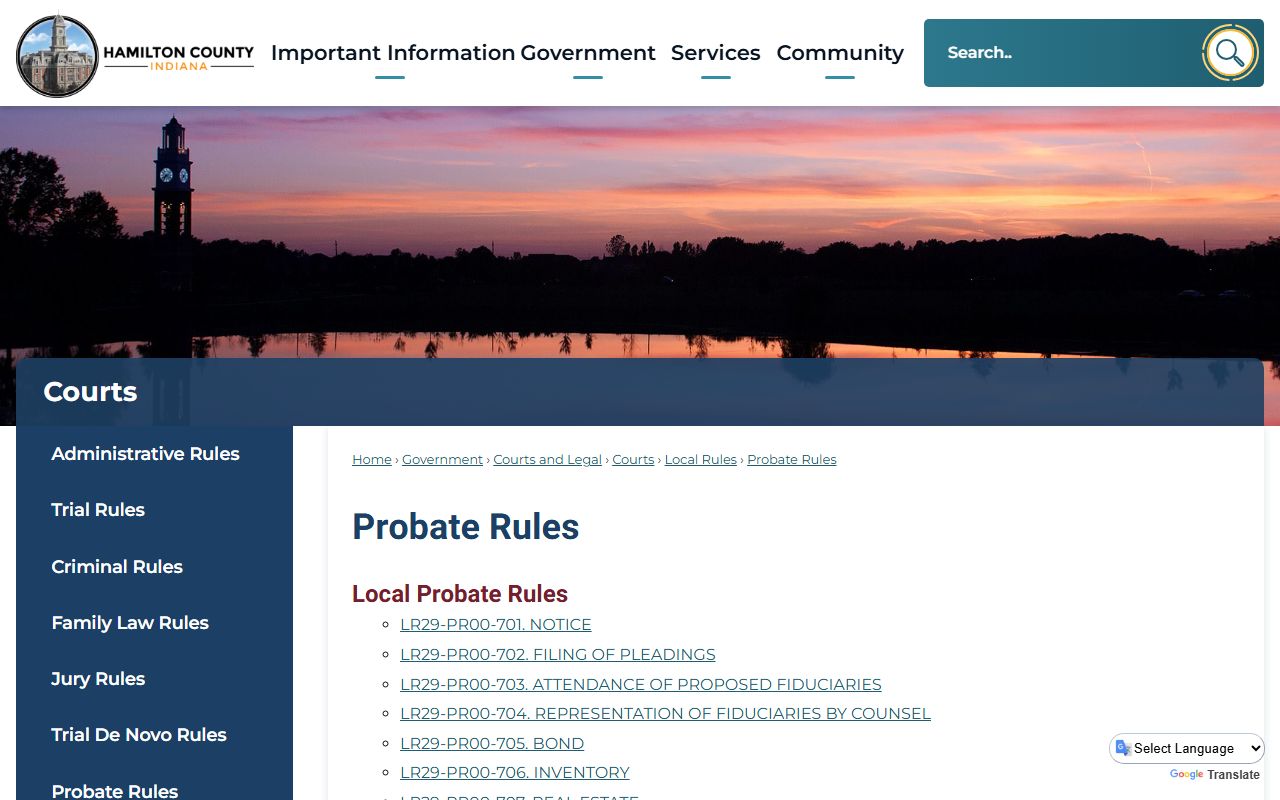
Read them before filing, since local steps differ from county to county.
Probate Terms Defined
Probate uses words that rarely come up anywhere else. A few definitions clear up most confusion before you read a case.
- Testator
- A person who makes a will.
- Executor
- The person named in a will to manage and settle the estate.
- Administrator
- The person a court appoints to settle an estate when there is no executor.
- Intestate
- Dying without a valid will, so state law decides who inherits.
- Guardianship
- A court appointment to make decisions for a minor or an incapacitated adult.
- Conservatorship
- A court appointment to manage the finances of someone who cannot.
How to Search Hamilton County Probate Records
Non-confidential probate dockets are in Indiana MyCase. Search by estate or party name, or by cause number, and use case-type filters for estate, guardianship, trust, or probate categories where available. For certified copies of a will, an appointment order, or a final decree, go to the Clerk.
- Open MyCase and search by estate name, party name, or cause number.
- Filter to Hamilton County and a probate case type if possible.
- Open the case and read the Chronological Case Summary.
- Request certified copies from the Clerk for official documents.
Do not assume adoption or minor-guardianship documents are public, because they are not.
Note: A printout of a MyCase probate docket is not a certified copy, so request official documents from the Clerk for any legal use.
Probate Courts in Hamilton County
There is no building marked "probate court" here. Probate cases are assigned among the Hamilton Circuit Court and the seven Superior Courts under local rules. All of them sit in the Government and Judicial Center in downtown Noblesville, and the Clerk handles filings and copies from Suite 106.
Hamilton County Clerk
1 Hamilton County Square, Suite 106
Noblesville, IN 46060
317-776-9629
Mon-Fri 8 a.m.-4:30 p.m.
The county court forms page, shown below, links small estate, guardianship, and probate forms.
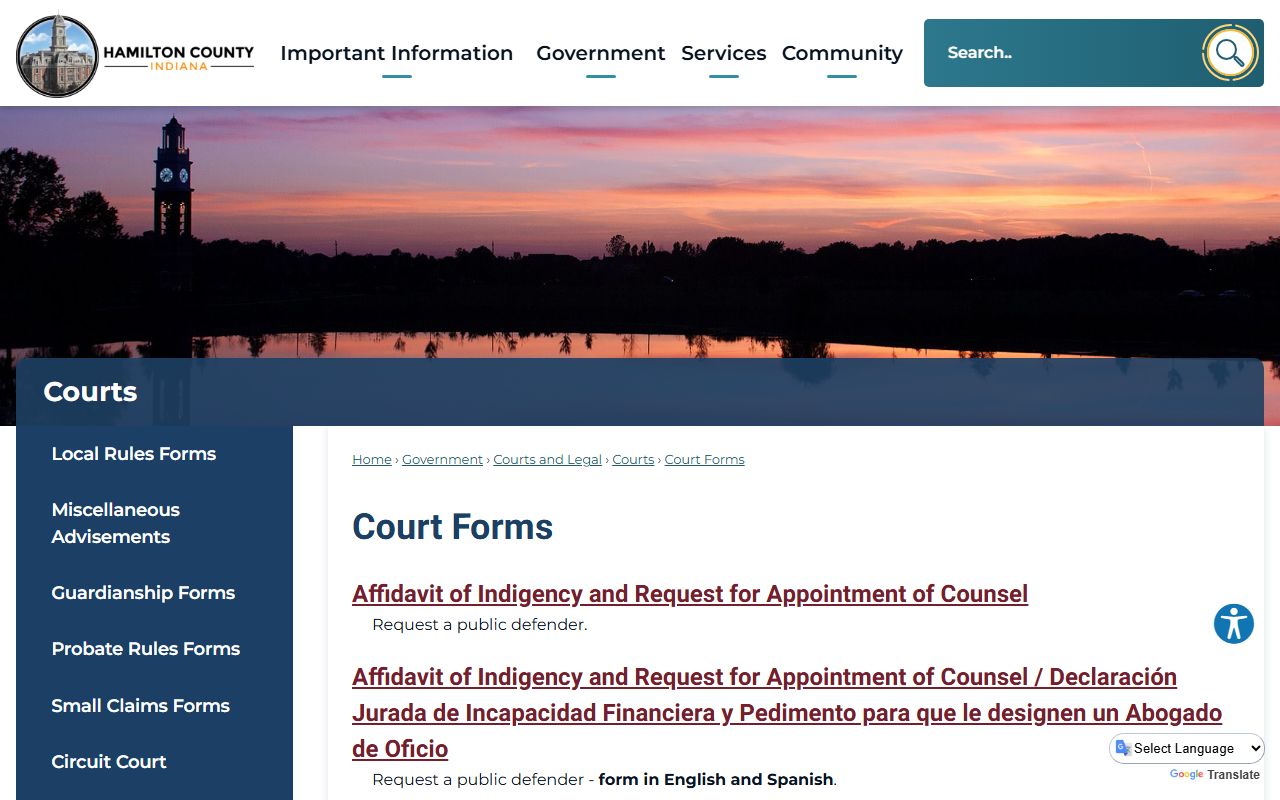
Pick the form that matches your filing before you visit the Clerk.
Probate Filing Fees
Probate filing fees are set in the county court-cost schedule, and certified copies carry a small fee quoted at payment. The county pages reviewed do not break out every probate fee line, so confirm the current amount with the Clerk. The small estate affidavit avoids a full estate when an estate is small enough.
| Item | Amount |
|---|---|
| Probate filing fee | See the county court-cost schedule |
| Certified copy | Small fee, quoted at payment |
| Small estate affidavit | For estates that do not exceed $100,000; not filed with the court |
Verify current Indiana small-estate thresholds and waiting periods under the probate code before relying on the affidavit.
How Probate Works in Hamilton County
Probate follows a path from opening an estate to a final decree. The exact steps depend on whether the estate is supervised, unsupervised, or small enough for an affidavit. Guardianships and trust matters add their own steps. The order below is the common shape of a Hamilton County estate.
- Decide what kind of filing fits: full estate, small estate affidavit, guardianship, or trust.
- Search MyCase to see whether a case already exists.
- Prepare the petition and the local and state forms.
- File in the correct Hamilton court under the local probate assignment rules.
- Give notice by publication or certified mail when required.
- File the inventory, claims responses, accountings, and final reports as needed.
- Record any real-estate decree with the proper Recorder.
- Get certified copies of appointment orders or the final decree from the Clerk.
Estate and fiduciary fees are generally paid only after the court approves the final accounting, though limited partial fee awards are possible in some situations.
Guardianships and Fiduciary Duties
A guardianship protects a minor or an adult who cannot manage their own affairs. A guardian or other fiduciary acts for someone else, not just themselves, which is why local rules often require counsel and a bond. Fiduciaries must account for the assets they manage, file reports, and follow the court's directions throughout the case.
Hamilton County's local probate rules cover guardian reports, minors' settlements, and wrongful-death estates. Because a fiduciary handles money and decisions for another person, the court watches these cases closely, and the public file usually shows the appointment and the reports while protecting sensitive personal detail.
What Hamilton County Probate Records Show
A probate file builds over the life of an estate. Most fields are public in ordinary estate matters, though inventories can hold sensitive financial data that may be redacted, and adoption details are confidential. The table below lists the common fields and their access.
| Field | Access |
|---|---|
| Case number | Public if non-confidential; Indiana cause number. |
| Estate or protected-person name | Estate names usually public; minor details may be restricted. |
| Fiduciary | Executor, administrator, guardian, or trustee where public. |
| Will filing | Public in ordinary estates unless sealed. |
| Inventory and accounting | Often public; sensitive figures may be redacted. |
| Final decree | Public; real-estate decrees may need recording. |
| Adoption details | Confidential. |
A final decree vesting real estate in heirs must be recorded with the county recorder where the property sits.
Restricted Probate Records
Adoption records are the clearest example of closed probate material. They are governed by Indiana adoption law and are not ordinary public probate files. Access usually requires statutory authority or a court order. Minor guardianship and protected-person details can also be limited.
The Indiana adoption chapter, shown below, sets the confidentiality and access rules.
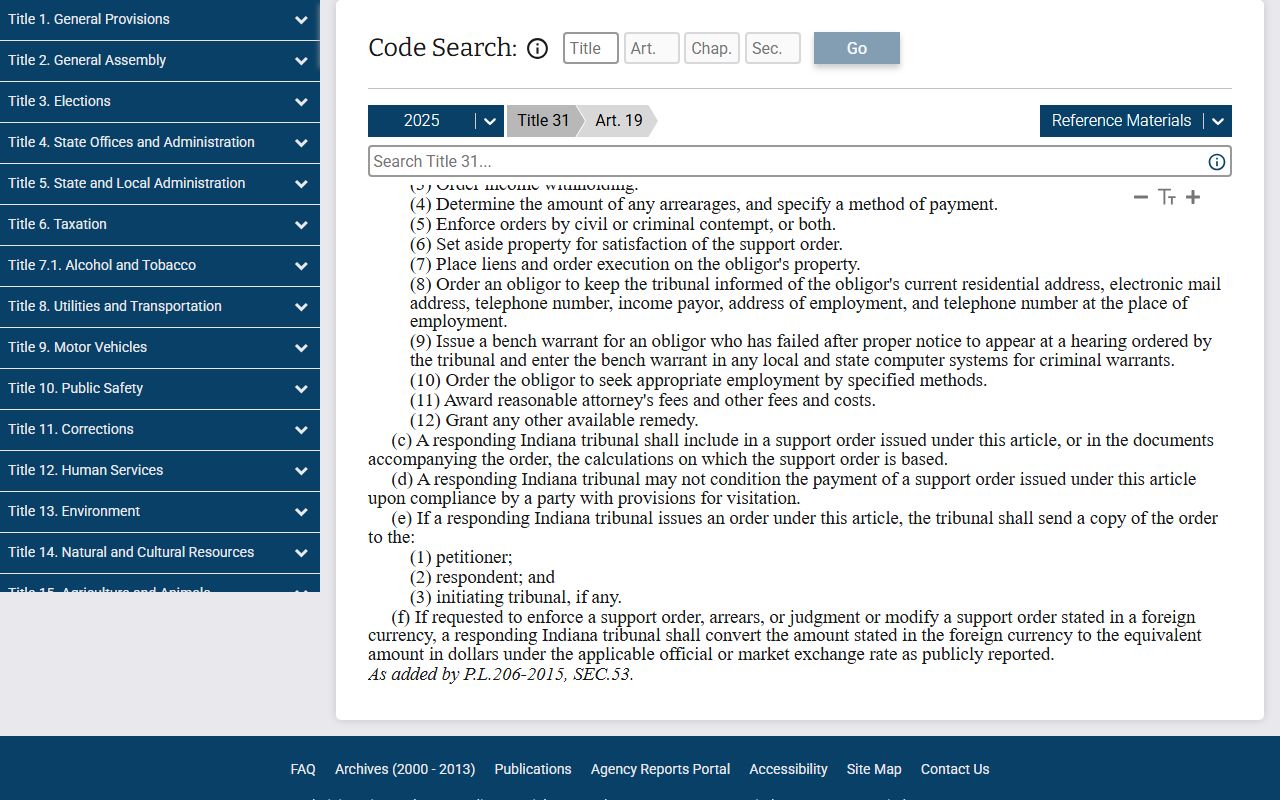
The broader probate code, shown below, governs estates, wills, claims, and accounting.
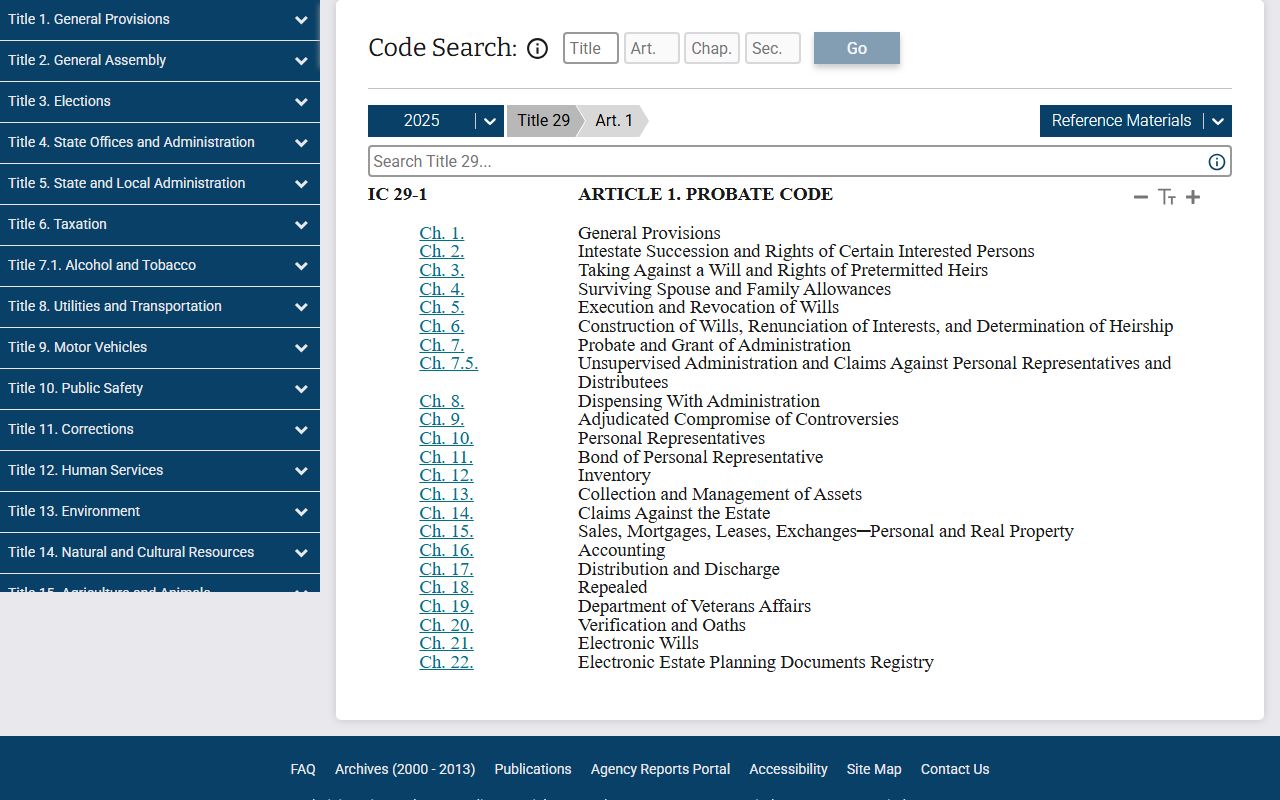
Read the statute at Indiana Code 29-1 for the full probate framework.
Notice rules round out the restrictions. Probate often requires notice by publication or certified mail, and attorneys prepare and serve that notice. Sensitive financial figures in an inventory may be redacted even when the case is public. So a probate file balances openness with privacy: the appointment and the decree are usually visible, while protected personal and financial details are not.
Related Hamilton County Records
You may also need marriage and divorce records, the Hamilton County Clerk for certified copies, or the full court records behind a case. For traffic matters, see traffic court records, pictured below.
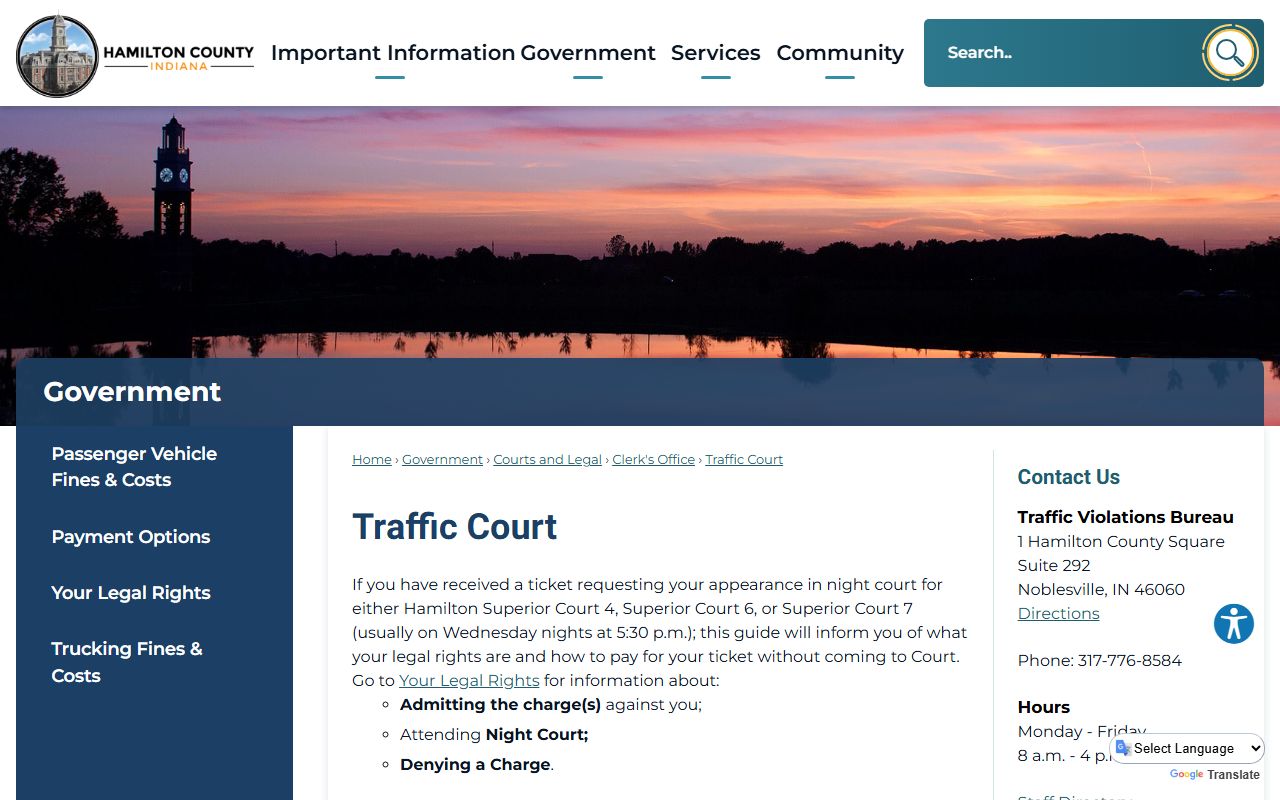
Traffic cases are searched separately from probate, by name or UTT number in MyCase, and they do not appear in an estate or guardianship file.