
Getting a Marriage License in Hamilton County
The Hamilton County Clerk issues marriage licenses, and the office processes applications by appointment only. Appointments can be virtual through Microsoft Teams or in person in Noblesville. Both applicants must attend the same meeting. The Clerk's Office is in the Government and Judicial Center, Suite 106, and marriage-license hours run Monday through Friday, 8 a.m. to 4 p.m.
An Indiana license is valid in Indiana only, and it expires 60 days after issuance. After the ceremony, the officiant must return the signed license within 30 days, and the Clerk then records it and sends two certified copies.
The county marriage license page, shown below, lists fees, the appointment process, and the online application step.
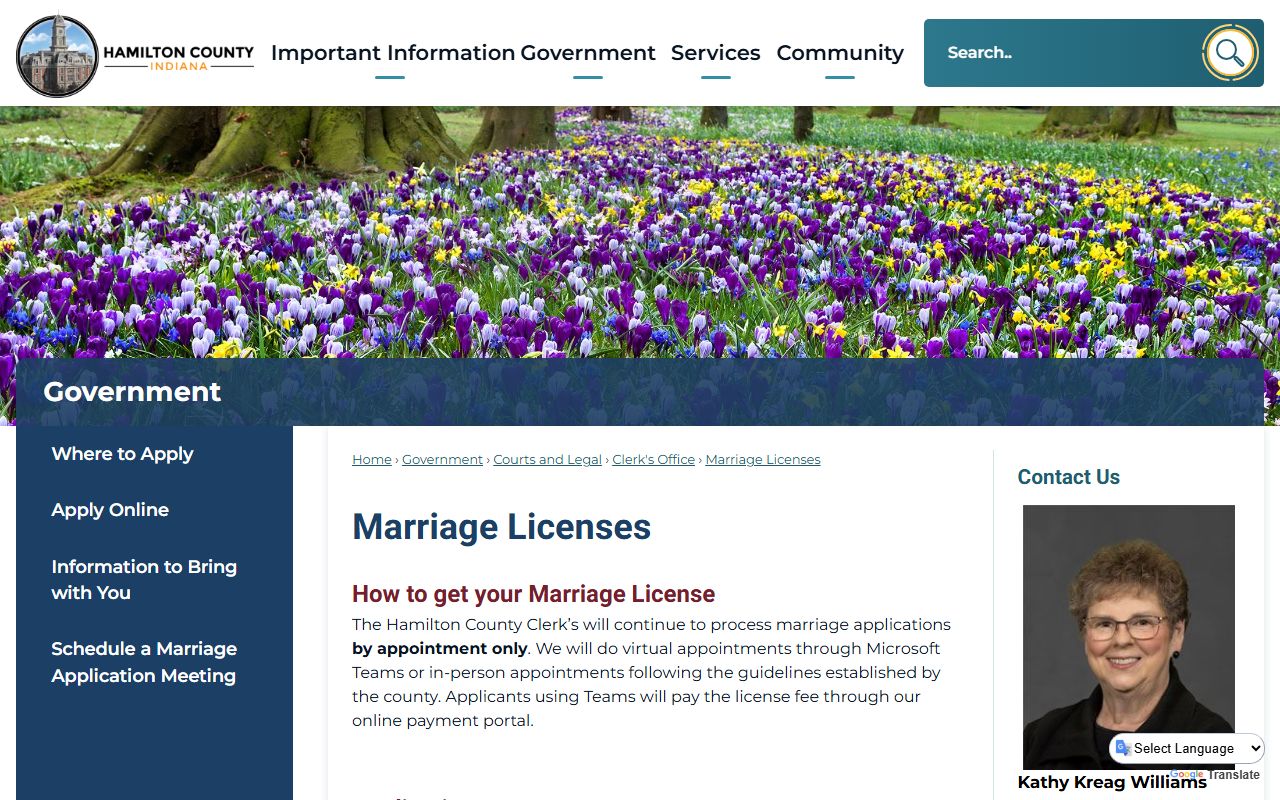
Start the online application before you book the appointment.
How to Apply for a Marriage License
The process moves online first, then to a short meeting, then to the ceremony. Public terminals are available in the Clerk's lobby for applicants without internet access.
- Complete the online application request before your appointment.
- Schedule and attend an application meeting with both applicants present.
- Sign the marriage application, in person or as the packet directs for a virtual meeting.
- Receive the license from the Clerk.
- Hold the ceremony after issuance and before the 60-day expiration.
- Have the officiant return the signed license within 30 days.
The Indiana Judicial Branch marriage license guide, shown below, covers statewide eligibility, timing, and the online application.
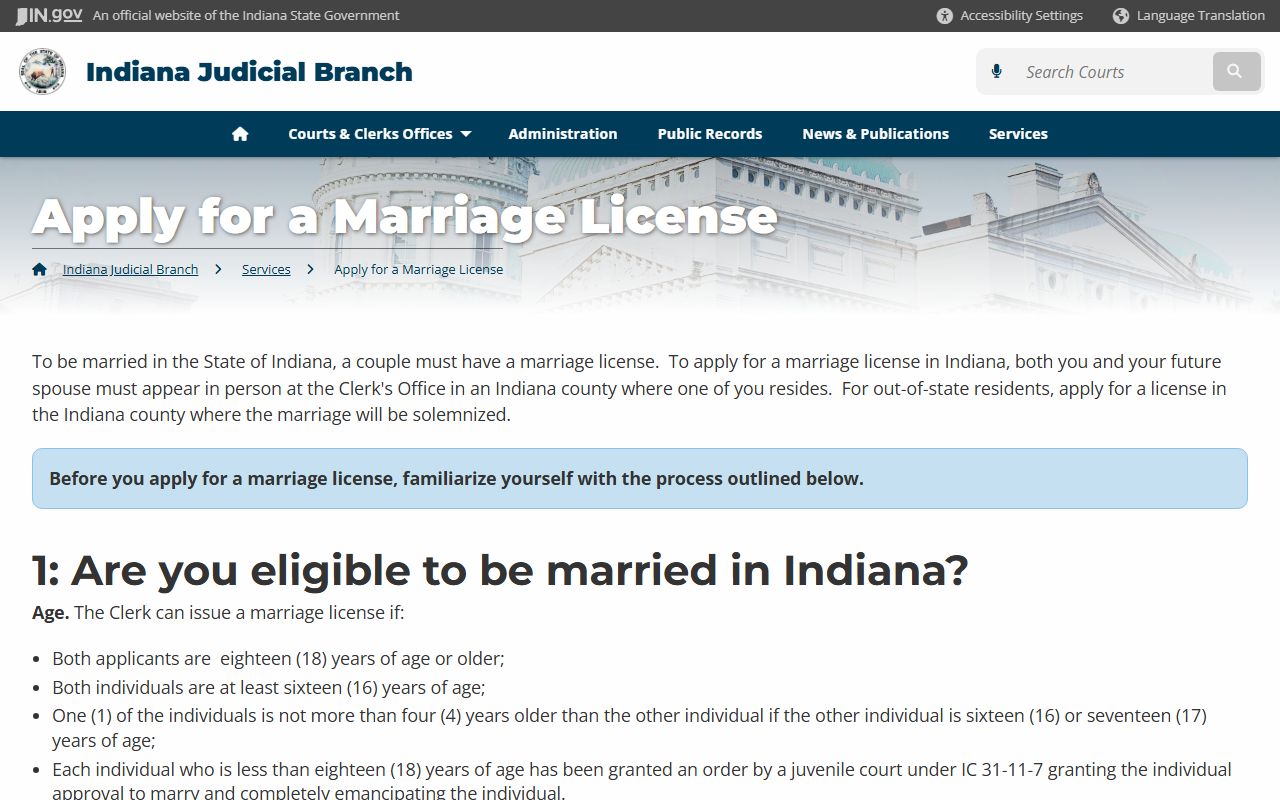
Eligible couples may marry the same day the license is issued.
Marriage License Application Fields
The application asks for identity, history, and family information for both applicants. Bring the right documents to the meeting so the Clerk can finish the license. The fields below come from the county and state instructions.
| Field | Notes |
|---|---|
| Valid identification | Required for both applicants. |
| Social Security information | Provided as part of the application. |
| Prior marriage information | How the most recent marriage ended: divorce, death, or annulment. |
| Parent / genealogical information | Required by state and county process. |
| Age eligibility | Adult applicants; strict court-order rules apply for 16 and 17 year olds. |
The county page on what to bring, shown below, lists identification, prior-marriage, and genealogical requirements.
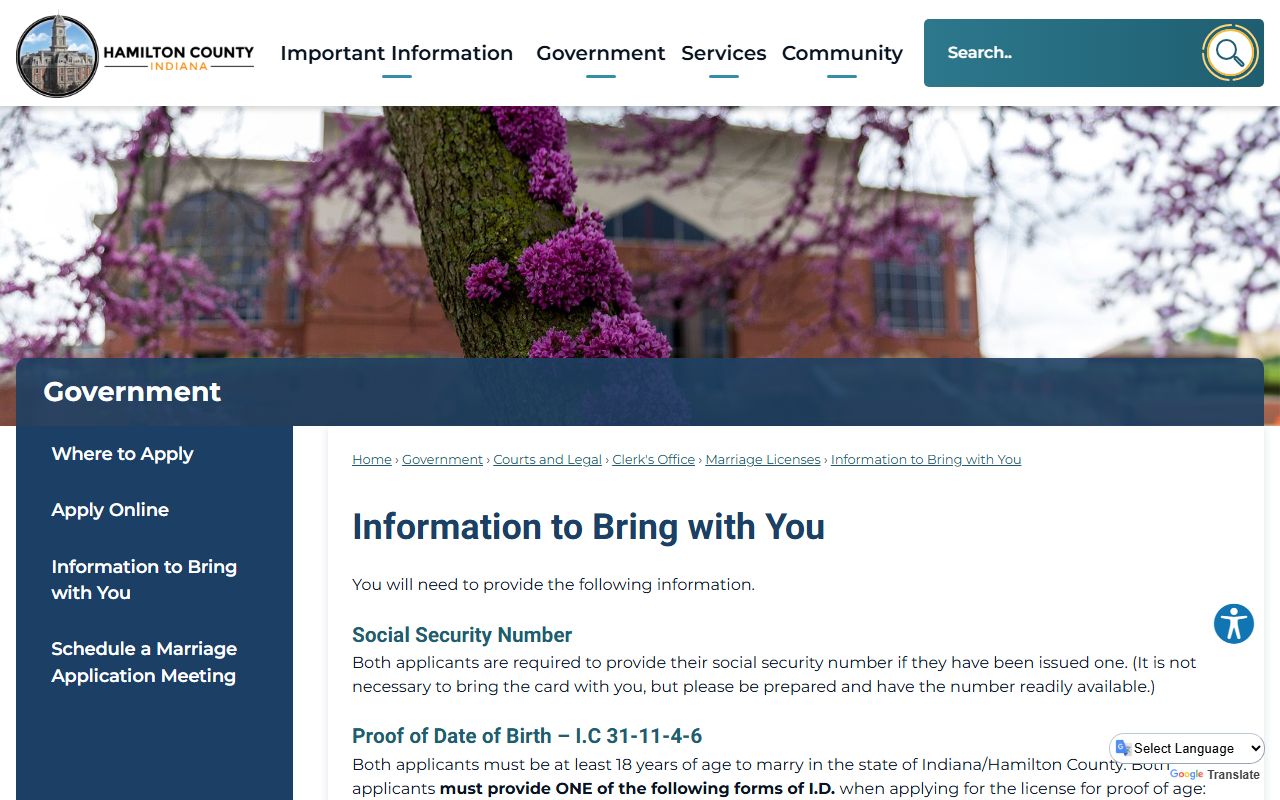
Bring an interpreter if either applicant needs one.
Hamilton County Marriage and Divorce Fees
Marriage license fees depend on residency, and both options include two certified copies. Divorce filing fees are set by the county court-cost schedule, and certified copies of a decree come from the Clerk. The fee table below covers the published marriage costs.
| Item | Fee |
|---|---|
| Marriage license, Indiana resident | $25 (includes two certified copies) |
| Marriage license, out-of-state resident | $65 (includes two certified copies) |
| Additional certified marriage copy | May be ordered; state guide notes copies are commonly about $4 |
| Clerk record request copies | Small fee, quoted at payment |
Out-of-state residents' licenses are valid only for ceremonies performed in Hamilton County. Applicants who use a virtual Microsoft Teams meeting pay through the county's online payment portal, while in-person applicants pay at the meeting by cash or credit card.
Note: Confirm the current payment methods and fee amount with the Clerk before your appointment, since details can change.
How to Look Up Hamilton County Marriage Records
The Clerk records the completed marriage license and is the source for certified marriage copies. Newer marriage records can also be checked through Indiana court and state resources. For an official certified copy, go to the Clerk that issued and recorded the license.
The county page on where to apply, shown below, explains the residency rules for Indiana and out-of-state couples.
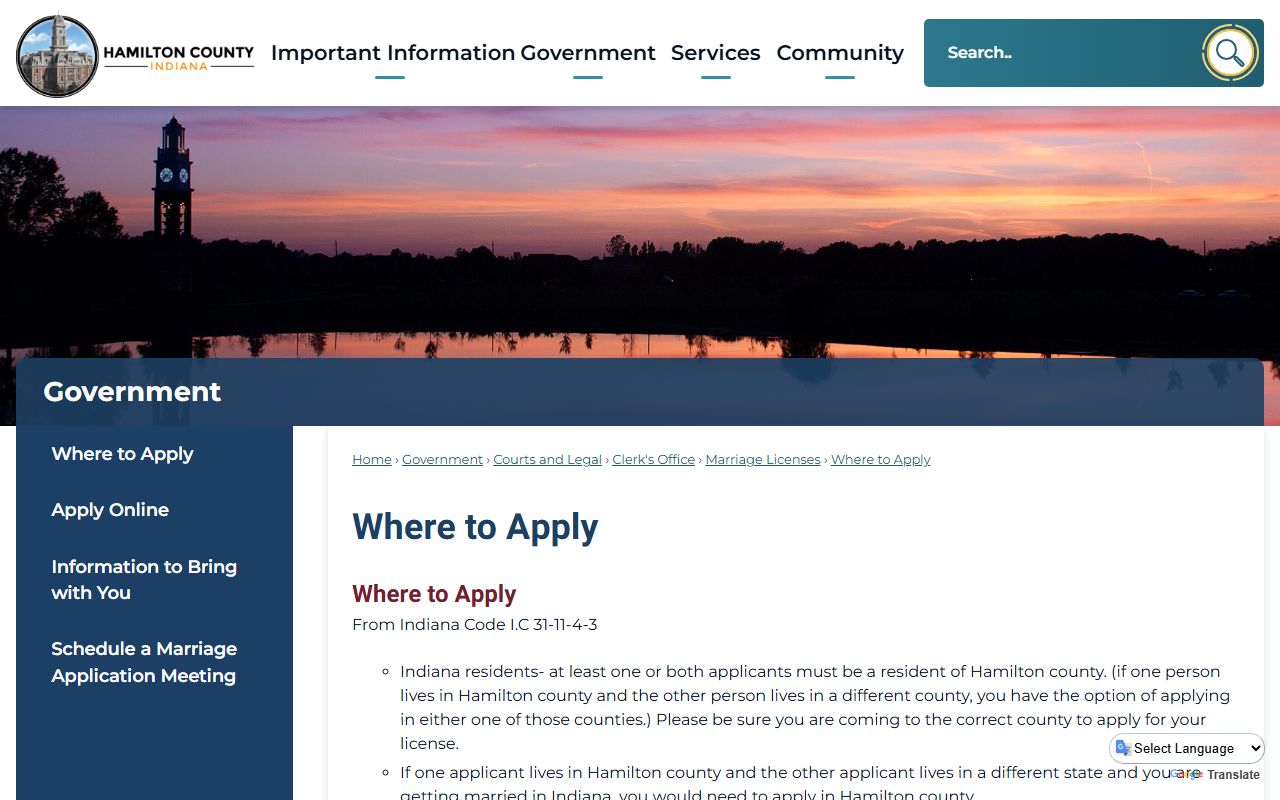
If at least one applicant lives in Hamilton County, the couple may apply here.
How to Find Hamilton County Divorce Records
Divorce, called dissolution in Indiana, is a court case. Search a non-confidential divorce case in MyCase by party name or cause number, then request certified copies from the Clerk. A divorce file can include petitions, financial declarations, parenting plans, child-support worksheets, mediation orders, and the final decree.
Sensitive details get protection. Child information, financial identifiers, and certain filings may be restricted or redacted, so the public docket may not show every document. The county Legal Self-Help Center assists eligible filers with divorce forms in four categories: with children and agreement, with children without agreement, without children and agreement, and without children without agreement.
How to File for Divorce in Hamilton County
A dissolution case starts with the right venue and the right forms. Indiana sets residency and venue rules, and the form set differs based on whether children and an agreement are involved. Eligible filers can get limited help from the Legal Self-Help Center, which assists with form selection but not legal strategy.
- Confirm Hamilton County is the correct venue under Indiana residency rules.
- Pick the right dissolution forms: with or without children, agreed or contested.
- File through Indiana e-filing or the Clerk as permitted.
- Pay the filing fee or request a fee waiver if you qualify.
- Serve the other party unless they waive service or appear.
- Attend hearings, mediation, and the final hearing as scheduled.
- Get certified copies of the decree from the Clerk when you need them.
Divorce dockets are generally public, but child, financial, and protective details may be restricted, so the online docket will not always show every filing.
Getting Certified Copies
For both marriage and divorce, certified copies come from the Hamilton County Clerk, not from a screenshot or a portal printout. The Clerk's Record Request page lists marriage and divorce documents among the records the office provides. Small fees apply, and the exact amount is given at payment.
If a name changes after a marriage or divorce, the driver record is updated separately through the Bureau of Motor Vehicles, which follows Indiana motor-vehicle law. That statute area, shown below, governs driving-related provisions that intersect with a name change.
A court name-change order or a marriage record is usually what the BMV needs to update a license.
Indiana Vital Records and Marriage Law
Indiana marriage law sets eligibility, license issuance, officiant rules, and the return and recording duties that Hamilton County follows. The Clerk's appointment-based process is built on that framework. For statewide guidance, the Indiana Judicial Branch publishes a marriage license guide that mirrors the county process.
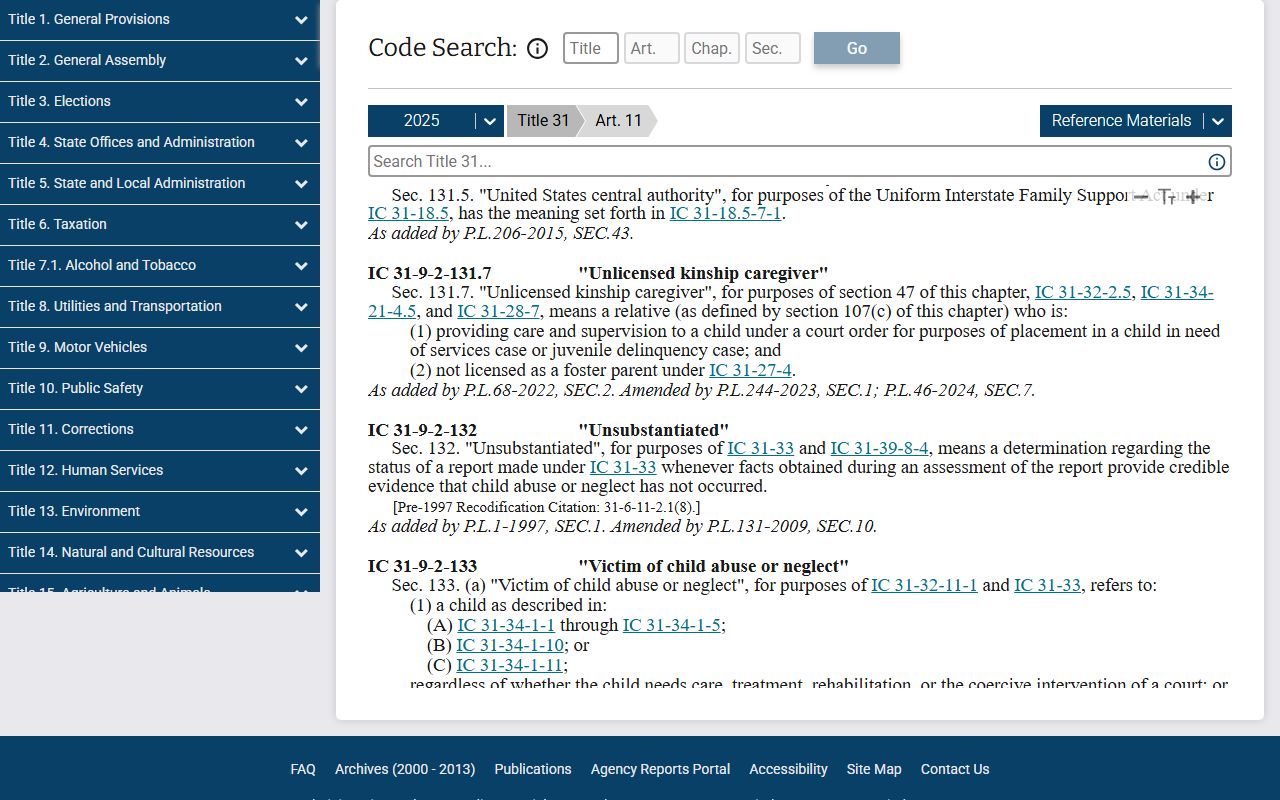
The Indiana marriage law chapter, shown below, is the statute behind the local process.
Read the chapter at Indiana Code 31-11 for the full marriage statute.
Older marriage research works a little differently. For newer records, the Clerk and Indiana court resources are the place to start, while genealogical or historical marriage research may also use state library and archive resources. Either way, the certified copy that carries legal weight comes from the Clerk that issued and recorded the license, not from a printout or a third-party listing.